
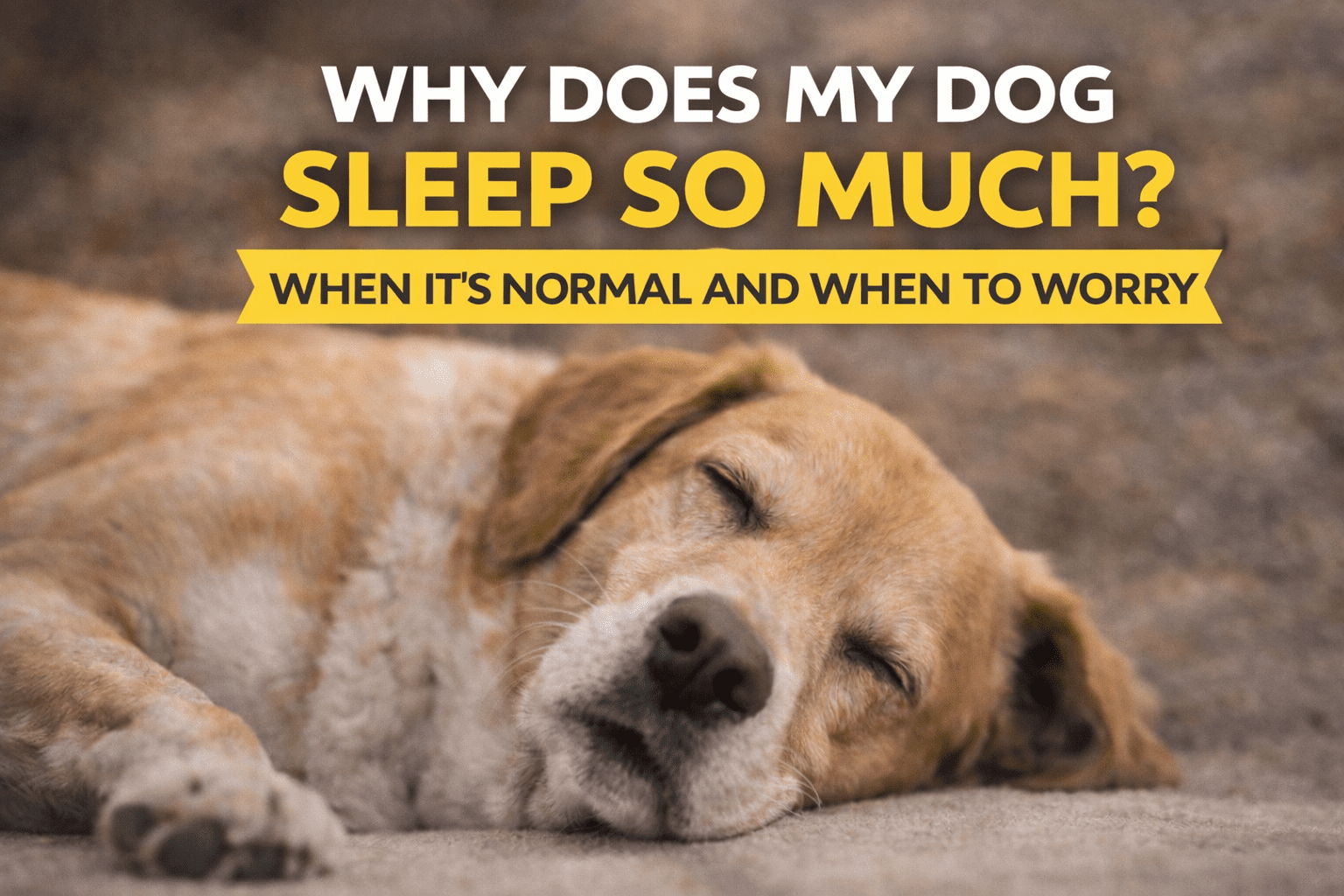
WHY DOES MY DOG SLEEP SO MUCH? (WHEN IT’S NORMAL AND WHEN TO WORRY)
Dogs spend a significant portion of their day sleeping, and for many owners, this can feel unusual. Compared to humans, dogs seem to rest constantly, often switching between short naps and longer sleep periods throughout the day. However, this behavior is deeply rooted in their biology and natural instincts.
How Much Sleep Is Normal for Dogs?
Understanding what is normal is the first step.
Most adult dogs sleep between 12 to 14 hours per day. Puppies and senior dogs can sleep even more—sometimes up to 18 or 20 hours. This doesn’t mean something is wrong. In fact, it reflects how dogs conserve energy and recover physically.
Unlike humans, dogs don’t experience long, uninterrupted sleep cycles. Instead, they rest in shorter bursts, which is why they require more total sleep time.
Age Plays a Major Role
Puppies Need More Sleep
Young dogs grow rapidly, both physically and mentally. Sleep helps them process new experiences and supports healthy development.
A puppy that sleeps a lot is usually a healthy puppy.
Senior Dogs Slow Down
Older dogs naturally become less active. As their metabolism slows and their joints age, they require more rest to stay comfortable.
This increase in sleep is typically normal unless combined with other symptoms like loss of appetite or confusion.
Breed and Size Differences
Not all dogs have the same energy levels.
Large breeds, such as Saint Bernards or Mastiffs, tend to sleep more than smaller dogs. These breeds naturally conserve energy and are less active compared to high-energy working dogs.
On the other hand, breeds like Border Collies or Australian Shepherds require more stimulation and may sleep less during the day.
Activity Level and Daily Routine
A dog’s lifestyle directly affects how much it sleeps.
Dogs that receive regular exercise will sleep to recover. This is healthy and expected. After physical activity, muscles need time to repair, and sleep supports this process.
However, dogs that do not get enough exercise may sleep simply out of boredom.
Boredom vs. Healthy Rest
There is a big difference between:
- Sleeping after activity
- Sleeping because there’s nothing to do
If your dog is inactive all day and constantly sleeping, it may be time to increase exercise and mental stimulation.
Mental Stimulation Matters
Physical exercise is only part of the equation.
Dogs also need mental challenges to stay engaged. Without stimulation, they may lose interest in their surroundings and sleep more than necessary.
Ways to improve this include:
- Puzzle toys
- Training sessions
- Interactive games
A mentally stimulated dog is more balanced and less likely to sleep out of boredom.
Diet and Energy Levels
Nutrition plays an important role in your dog’s energy.
A high-quality diet supports:
- Stable energy levels
- Better digestion
- Healthier sleep cycles
Dogs that eat low-quality food may appear sluggish or tired more often.
Ensuring your dog receives proper nutrition can significantly improve their overall activity and sleep patterns.
Environmental Factors
Your dog’s surroundings can influence how much they sleep.
A calm and quiet home encourages relaxation, while a busy or stressful environment may disrupt sleep patterns.
Dogs often adapt to their environment. If the household is quiet during the day, your dog may naturally rest more.
Dogs Mirror Human Behavior
Dogs are incredibly in tune with their owners.
If you spend a lot of time relaxing, working from home, or sitting, your dog may follow your routine. This means more rest and less activity.
In more active households, dogs tend to stay more engaged and alert.
When Sleeping Becomes a Concern
While most cases are normal, there are situations where excessive sleep may signal a problem.
Watch for warning signs such as:
- Sudden increase in sleep
- Lack of interest in food
- Low energy when awake
- Behavioral changes
If your dog seems unusually tired or unresponsive, it may be time to consult a veterinarian.
How to Improve Your Dog’s Energy Levels
If you feel your dog is sleeping too much, there are simple ways to help.
- Increase daily walks
- Add structured playtime
- Introduce new toys
- Maintain a consistent routine
These changes can help balance sleep and activity levels.
Final Thoughts
Dogs sleeping a lot is usually completely normal and part of their natural rhythm. Their bodies are designed to conserve energy, recover efficiently, and adapt to their environment.
Instead of focusing only on how much your dog sleeps, pay attention to their behavior when they are awake. A healthy dog should still be alert, responsive, and engaged.
By understanding your dog’s needs and providing the right balance of activity, stimulation, and rest, you can ensure they stay happy and healthy.