
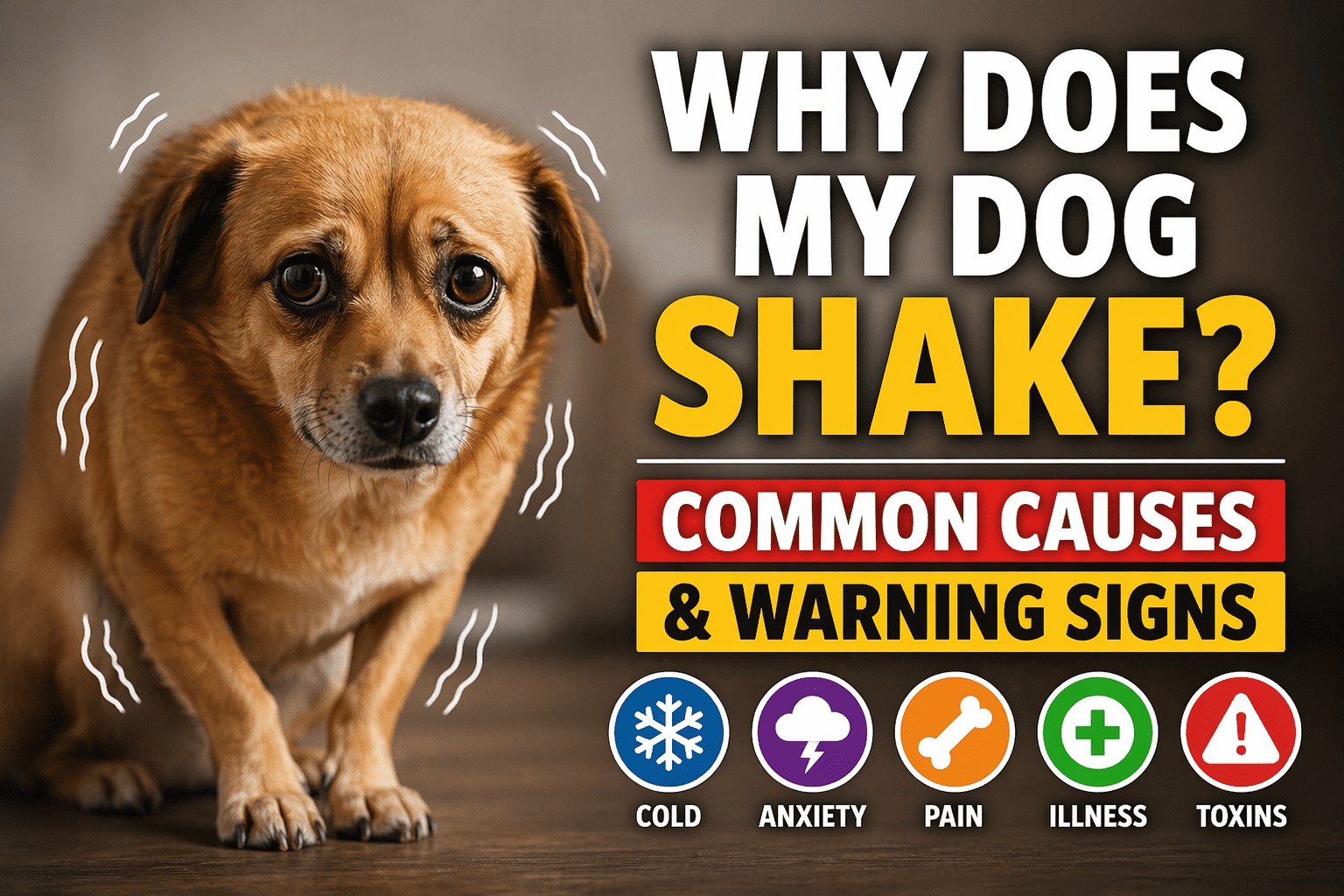

WHY DOES MY DOG SHAKE? (COMMON CAUSES AND WHEN TO WORRY)
Dogs shaking or trembling can be surprising for many owners. Sometimes it happens suddenly, without any obvious reason, leaving you wondering what’s going on. While shaking can be completely harmless in many situations, it can also signal something more serious depending on the context.
Normal Reasons Dogs Shake
Not all shaking is a cause for concern. In fact, many dogs shake for completely normal reasons.
Excitement and Anticipation
Dogs often shake when they are excited.
You may notice this:
- Before going for a walk
- When you grab their leash
- During playtime
This type of shaking is usually short-lived and stops once the excitement settles.
Cold Temperature
Just like humans, dogs can shiver when they feel cold.
This is especially common in:
- Small breeds
- Short-haired dogs
- Puppies
If your dog is shaking and the environment is cold, providing warmth usually solves the issue quickly.
After Bath or Water Exposure
Dogs naturally shake their bodies after getting wet.
This helps them:
- Remove excess water
- Regulate body temperature
This type of shaking is completely normal and expected.
Emotional and Behavioral Causes
Shaking can also be linked to emotions.
Fear and Anxiety
One of the most common causes of shaking is fear.
Triggers may include:
- Loud noises (thunder, fireworks)
- Unfamiliar environments
- New people or animals
In these cases, shaking is usually accompanied by:
- Tail tucked
- Ears back
- Avoidance behavior
Stress and Overstimulation
Dogs can become overwhelmed in certain situations.
Examples include:
- Busy environments
- Too much noise
- Long periods without rest
Shaking in this context is a sign your dog needs a calmer environment.
Attention-Seeking Behavior
Some dogs learn that shaking gets attention.
If you respond by:
- Talking to them
- Picking them up
- Giving treats
They may repeat the behavior.
Consistency is key to avoiding reinforcement of this habit.
Medical Causes of Shaking
While many reasons are harmless, shaking can sometimes indicate a health issue.
Pain or Injury
Dogs may shake when they are in pain.
Look for additional signs such as:
- Limping
- Whining
- Reduced activity
Pain-related shaking should not be ignored.
Illness or Fever
Shaking can be a symptom of illness.
Possible causes include:
- Infection
- Fever
- Digestive issues
If your dog seems weak or unwell, it’s important to monitor closely.
Neurological Issues
In rare cases, shaking may be linked to neurological conditions.
This type of shaking may appear as:
- Continuous tremors
- Loss of coordination
- Unusual movement patterns
Professional evaluation is necessary in these situations.
Toxic Exposure
If a dog consumes something toxic, shaking can occur quickly.
This may be accompanied by:
- Vomiting
- Drooling
- Lethargy
This is an emergency situation and requires immediate action.
Age-Related Factors
Age can also influence shaking behavior.
Puppies
Young dogs may shake due to:
- Excitement
- Immature nervous systems
This is usually temporary and improves over time.
Senior Dogs
Older dogs may experience:
- Muscle weakness
- Joint discomfort
- Neurological decline
Shaking in older dogs should be observed carefully.
When Should You Be Concerned?
Occasional shaking is normal. However, you should take it seriously if:
- Shaking is frequent or constant
- It appears suddenly without a clear reason
- It is combined with other symptoms
- Your dog seems unwell or in pain
In these cases, consulting a veterinarian is the safest option.
How to Help Your Dog
If your dog shakes occasionally, there are ways to help reduce it.
- Keep them warm in cold environments
- Provide a calm and safe space
- Maintain a consistent routine
- Avoid reinforcing attention-seeking behavior
Understanding the cause is the key to choosing the right solution.
Final Thoughts
Shaking in dogs can range from completely normal behavior to a sign of something more serious. The key is to observe your dog’s overall condition, not just the shaking itself.
A healthy dog should remain alert, responsive, and engaged. By paying attention to patterns and triggers, you can better understand your dog’s needs and respond appropriately.m