
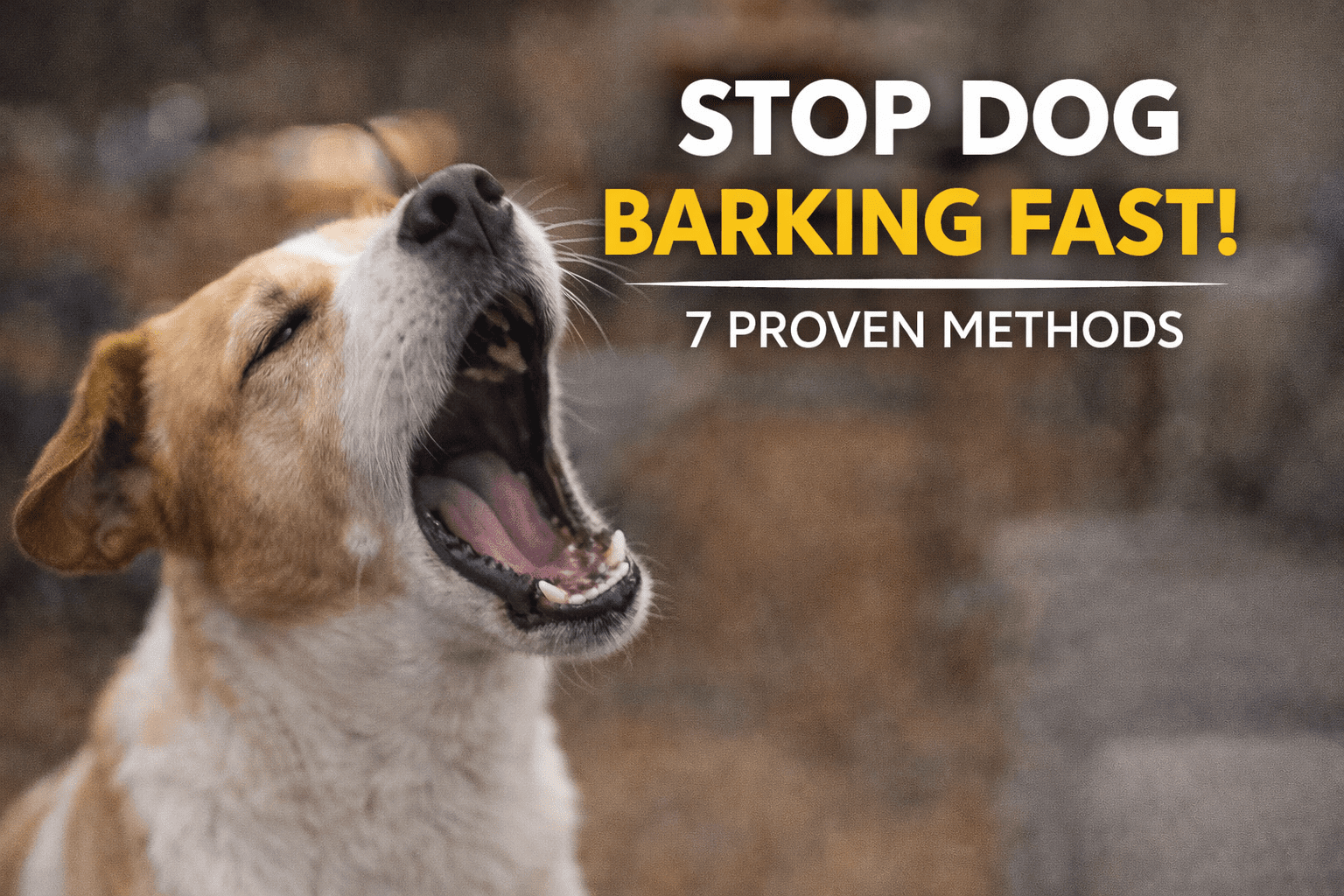

How to Train Your Dog to Stop Barking (7 Proven Methods)
Introduction
Excessive barking is one of the most common problems dog owners face.
While barking is completely natural, too much of it can become frustrating—not only for you but also for your neighbors. The good news is that barking is a behavior you can control with the right approach.
Understanding why your dog barks is the first step. From there, you can apply simple and effective training techniques to reduce unnecessary noise while keeping your dog happy and healthy.
Why Do Dogs Bark So Much?
Before training, you need to understand the cause.
Dogs bark for several reasons:
- boredom
- attention-seeking
- fear or anxiety
- territorial behavior
- excitement
If you treat the symptom without fixing the cause, the barking will continue.
1. Remove the Trigger
Dogs often bark at specific triggers.
This could be:
- people passing by
- other dogs
- noises
If possible, reduce your dog’s exposure to these triggers.
👉 Example:
Close curtains if your dog barks at people outside.
2. Ignore Attention-Seeking Barking
Many dogs bark simply to get your attention.
If you respond every time, you are training your dog to bark more.
Instead:
- ignore barking
- reward silence
👉 Important: consistency is key
3. Use Positive Reinforcement
Reward your dog when they stay calm.
When your dog stops barking:
✔ give treats
✔ praise calmly
✔ reinforce quiet behavior
This teaches your dog that silence = reward.
4. Teach the “Quiet” Command
This is one of the most effective techniques.
Steps:
- Let your dog bark
- Say “Quiet” calmly
- Wait for silence
- Reward immediately
Repeat consistently until your dog understands the command.
5. Increase Physical Exercise
A tired dog is a quiet dog.
Dogs with excess energy are more likely to bark.
Make sure your dog gets:
- daily walks
- playtime
- physical activity
This reduces boredom and stress.
6. Provide Mental Stimulation
Mental boredom is just as important as physical.
Use:
- puzzle toys
- training games
- interactive play
A mentally engaged dog is less likely to bark unnecessarily.
7. Avoid Punishment-Based Training
Punishing your dog for barking often makes things worse.
It can lead to:
- fear
- anxiety
- more barking
Instead, focus on teaching your dog what to do, not what not to do.
Common Mistakes to Avoid
❌ Yelling at your dog
→ they think you’re joining the barking
❌ Inconsistent training
→ confuses the dog
❌ Not identifying the cause
→ problem continues
How Long Does Training Take?
Every dog is different.
With consistency:
- small improvements: a few days
- noticeable change: 1–2 weeks
- strong habit change: 3–4 weeks
When to Seek Professional Help
If barking becomes extreme, consider help.
Signs include:
- nonstop barking
- aggression
- anxiety symptoms
A professional trainer can speed up progress.
Conclusion
Stopping excessive barking isn’t about forcing silence—it’s about understanding your dog.
With patience, consistency, and the right training methods, you can teach your dog when it’s okay to bark and when it’s time to be quiet.
The result?
A calmer dog and a more peaceful home.