
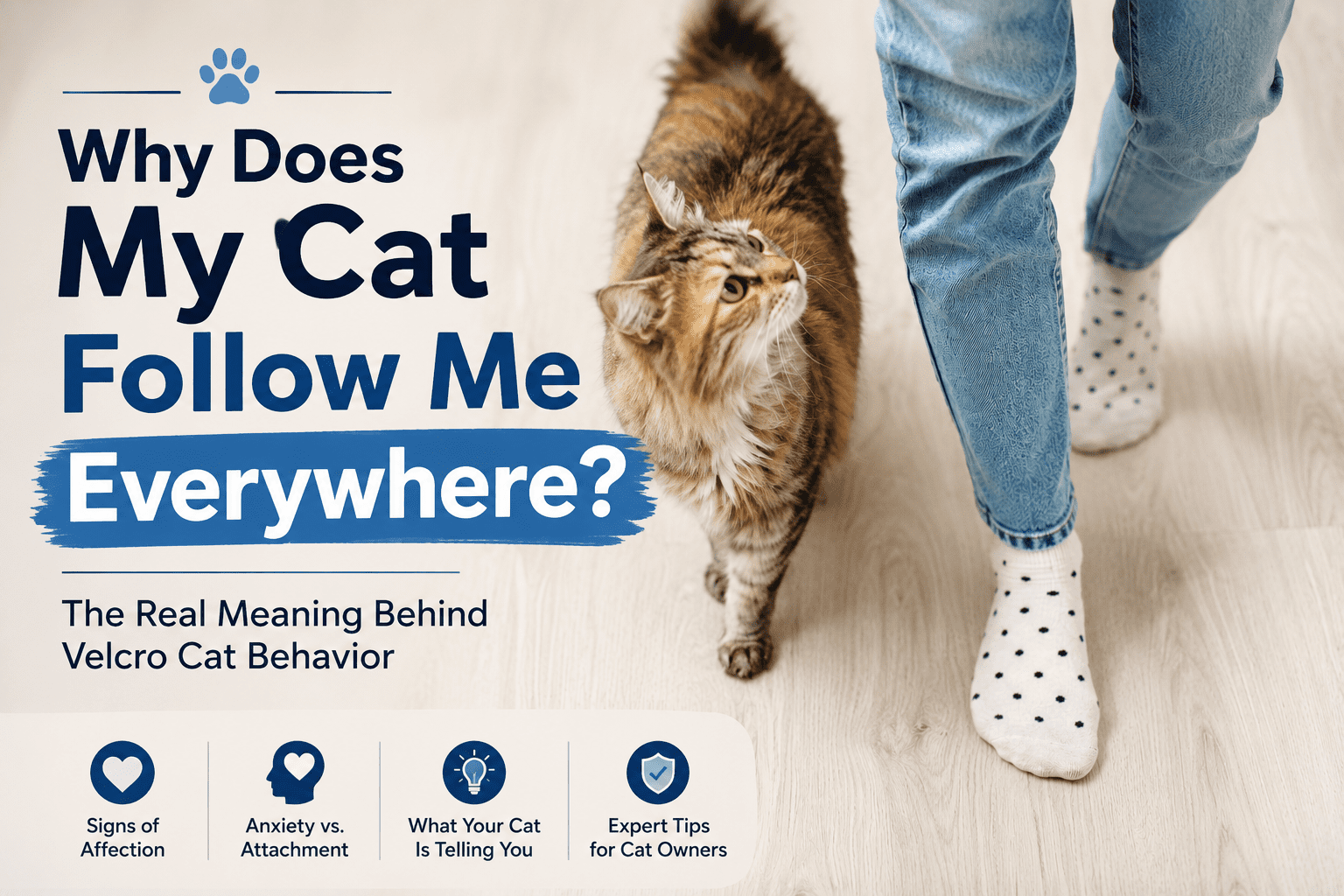

Why Does My Cat Follow Me Everywhere? The Real Meaning Behind Velcro Cat Behavior
Cats are famous for being independent, mysterious, and sometimes emotionally distant. But what happens when your cat suddenly starts following you from room to room like a shadow? If you’ve ever gone to the bathroom with an audience or noticed tiny paws trailing behind you all day, you’re not alone.
This behavior is far more common than most cat owners realize. In fact, “Velcro cat” behavior has become one of the most searched cat behavior topics online because many pet parents wonder whether it’s normal, affectionate, or a sign of anxiety.
The good news? In most cases, your cat following you everywhere is actually a positive sign. However, understanding why it happens can help you strengthen your bond and recognize when something deeper may be going on.
Why Do Cats Follow Their Owners Everywhere?
Cats follow humans for several emotional, instinctive, and environmental reasons. While every cat has a unique personality, these are the most common explanations.
Your Cat Feels Safe Around You
Cats are naturally cautious animals. In the wild, survival depends on identifying safe territory and trustworthy companions. When your cat follows you around the house, it often means they see you as their secure base.
You are the source of food, comfort, warmth, routine, and emotional stability. For indoor cats especially, humans become an important part of their social structure.
A cat that follows you consistently is usually showing trust rather than dependency.
They Want Attention and Interaction
Some cats are surprisingly social. Breeds like the Siamese, Maine Coon, Bengal, and Ragdoll are known for being highly attached to their humans.
Your cat may follow you because they:
- Want to play
- Expect treats or food
- Seek petting
- Feel bored
- Enjoy your company
Cats quickly learn patterns. If walking into the kitchen often results in snacks, they’ll happily escort you there every time.
Curiosity Drives Their Behavior
Cats are extremely observant creatures. They notice everything happening in their environment, including your movements.
If you suddenly stand up, your cat may simply think:
- “Where are we going?”
- “Could something interesting happen?”
- “Will food appear?”
This curiosity is linked to their hunting instincts. Motion naturally attracts feline attention.
Is It Normal for Cats to Follow You to the Bathroom?
Yes — and it’s one of the funniest yet most common cat behaviors.
Bathrooms are full of things cats find fascinating:
- Running water
- Closed spaces
- Cool surfaces
- Strange sounds
- Undivided human attention
Many cats also dislike closed doors because they feel excluded from part of their territory. Your bathroom trip becomes a mystery they desperately need to investigate.
For some cats, bathroom visits become bonding rituals because humans are temporarily stationary and easier to interact with.
When Following Behavior May Signal Anxiety
Although clingy behavior is often harmless, sudden excessive attachment can sometimes indicate stress or emotional discomfort.
Signs Your Cat May Be Experiencing Anxiety
Watch for these additional symptoms:
- Excessive meowing
- Loss of appetite
- Hiding behavior
- Overgrooming
- Aggression
- Litter box problems
- Destructive scratching
If your cat suddenly becomes unusually attached after a major change — such as moving homes, introducing a new pet, or changes in your schedule — separation anxiety may play a role.
Cats thrive on routine, and disruptions can make them feel insecure.
Senior Cats May Become More Dependent
Older cats sometimes follow owners more frequently due to:
- Vision decline
- Hearing loss
- Cognitive dysfunction
- Increased need for reassurance
Senior cats often seek comfort and familiarity as they age. If this behavior appears alongside confusion or nighttime vocalization, a veterinary checkup is recommended.
How to Encourage Healthy Independence
While affection is wonderful, it’s also important that your cat feels confident when alone.
Create Environmental Enrichment
A mentally stimulated cat is less likely to become overly dependent.
Helpful enrichment ideas include:
- Cat trees
- Window perches
- Puzzle feeders
- Interactive toys
- Rotating play sessions
Environmental stimulation keeps your cat engaged even when you’re busy.
Avoid Reinforcing Constant Attention-Seeking
If your cat demands attention every minute, avoid rewarding every single request immediately.
Instead:
- Schedule dedicated playtime
- Use interactive toys
- Reward calm independent behavior
- Maintain consistent feeding routines
This helps create balance without damaging your bond.
Why Some Cats Are More Clingy Than Others
Not all cats show affection the same way. Personality differences depend on several factors.
Breed Personality
Some breeds are naturally more social and people-oriented.
Highly affectionate breeds include:
- Siamese
- Ragdoll
- Sphynx
- Burmese
- Maine Coon
These cats often crave near-constant interaction.
Early Socialization Matters
Kittens raised with positive human interaction during their first weeks of life are more likely to become attached adult cats.
Cats that experienced abandonment or inconsistent care may also develop stronger attachment behaviors later.
Indoor Cats Often Bond More Intensely
Indoor-only cats rely heavily on humans for stimulation and companionship. Since their world is smaller, their social connections become more concentrated.
This often explains why indoor cats behave more like loyal companions than distant roommates.
Does Following You Mean Your Cat Loves You?
In many cases, yes.
Cats express affection differently from dogs. Instead of dramatic excitement, they show love through subtle behaviors like:
- Following you
- Slow blinking
- Sleeping near you
- Head bunting
- Purring
- Bringing toys
- Staying in the same room
A cat choosing to stay close is often one of the strongest signs of emotional attachment.
Unlike common stereotypes, many cats form deep emotional bonds with their owners.
Final Thoughts
If your cat follows you everywhere, it usually means you’ve become an important source of comfort, safety, and companionship.
Most of the time, this behavior is completely normal and even healthy. It reflects trust and emotional connection rather than neediness.
However, sudden changes in clinginess should never be ignored. Observing your cat’s overall mood, appetite, and behavior can help you determine whether the behavior is affectionate or stress-related.
At the end of the day, having a tiny furry shadow around the house is often a sign that your cat genuinely enjoys being part of your life.