
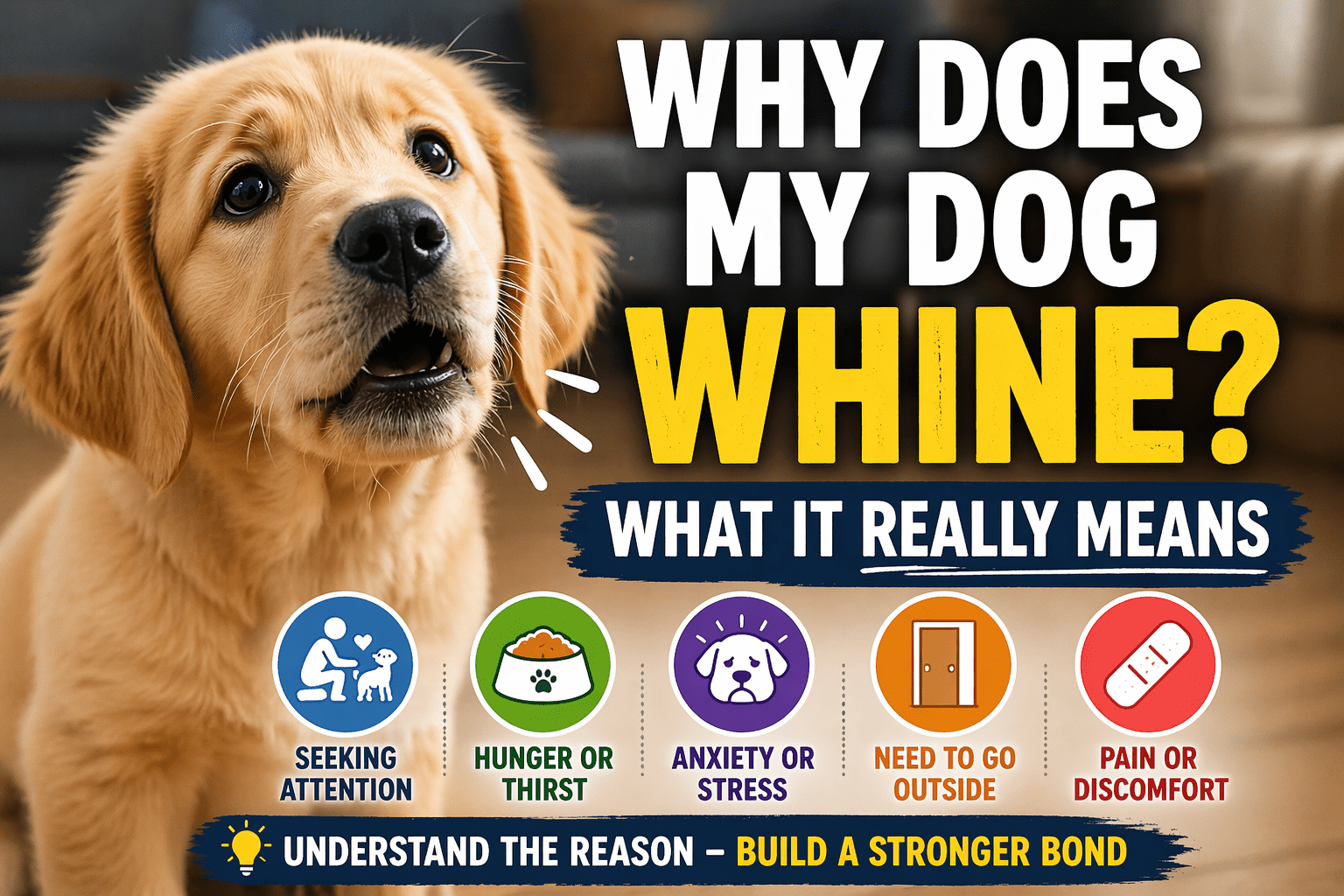

WHY DOES MY DOG WHINE? (WHAT YOUR DOG IS REALLY TRYING TO TELL YOU)
Dogs don’t use words, but they are constantly communicating. One of the most common ways they express themselves is through whining. That soft, high-pitched sound can mean many different things depending on the situation. Sometimes it’s harmless, sometimes it signals a deeper need.
Understanding why your dog whines is essential if you want to respond correctly instead of accidentally reinforcing unwanted behavior.
What Is Whining in Dogs?
Whining is a vocal expression that dogs use to communicate discomfort, excitement, need, or emotion. Unlike barking, which is often louder and more alert-based, whining is usually softer and more persistent.
It’s important to recognize that whining is not “bad behavior” by default. It’s a form of communication.
Common Reasons Dogs Whine
Seeking Attention
One of the most frequent reasons dogs whine is to get your attention.
Dogs quickly learn patterns. If whining results in:
- Eye contact
- Talking
- Touch
- Treats
They will repeat it.
Over time, this can become a learned behavior rather than a genuine need.
Excitement and Anticipation
Dogs may whine when they are excited.
You might notice this:
- Before a walk
- When you prepare food
- During playtime
This type of whining is usually temporary and stops once the event happens.
Anxiety and Stress
Whining can also be a sign of emotional distress.
Triggers may include:
- Being left alone
- Loud noises
- New environments
- Changes in routine
Dogs experiencing anxiety often show additional signs like pacing, panting, or restlessness.
Physical Needs
Sometimes the reason is simple.
Your dog may need:
- To go outside
- Food or water
- More comfortable conditions
Whining in this case is direct communication.
Ignoring it repeatedly can lead to frustration.
Pain or Discomfort
One of the most important causes to consider is pain.
Dogs may whine if they are experiencing:
- Injury
- Illness
- Internal discomfort
Unlike humans, dogs often hide pain, so whining can be one of the first visible signs.
If whining is sudden and unusual, it should be taken seriously.
Separation Anxiety
This is one of the most common behavioral issues.
Dogs with separation anxiety may:
- Whine when you leave
- Cry at doors or windows
- Show destructive behavior
This is not just “missing you.” It’s a deeper stress response that needs proper management.
Learned Behavior
Dogs are excellent at learning what works.
If whining leads to a reward, even once, they may repeat it.
For example:
- You give attention → whining increases
- You give treats → whining becomes routine
Consistency is critical in these situations.
Puppies Whine More
Puppies use whining more frequently.
This is normal because:
- They are adjusting to a new environment
- They are separated from their mother
- They are learning how to communicate
With time and proper structure, whining usually decreases.
How to Tell the Difference Between Needs and Habit
This is where many owners struggle.
Ask yourself:
- Did my dog just eat?
- Have they exercised?
- Do they need to go outside?
If all needs are met, the whining is likely behavioral.
How to Respond the Right Way
When It’s a Real Need
✔ Respond calmly
✔ Solve the issue (food, bathroom, comfort)
✔ Avoid overreacting
When It’s Attention-Seeking
✔ Do not immediately respond
✔ Wait for calm behavior
✔ Reward silence, not whining
When It’s Anxiety
✔ Create a safe environment
✔ Use routines
✔ Avoid sudden changes
In some cases, training or professional help may be needed.
Mistakes Owners Often Make
Many people unintentionally reinforce whining.
Common mistakes include:
- Giving attention every time
- Talking to the dog while whining
- Reacting emotionally
Dogs don’t understand words the way humans do, but they understand reactions very well.
Building Better Communication
Instead of focusing only on stopping whining, focus on improving communication.
- Establish clear routines
- Provide enough physical activity
- Add mental stimulation
- Reward calm behavior
A balanced dog has fewer reasons to whine excessively.
When to Be Concerned
You should pay attention if:
- Whining is constant
- It starts suddenly
- It’s combined with unusual behavior
- Your dog seems unwell
These may indicate underlying issues that require attention.
Final Thoughts
Whining is one of the most misunderstood behaviors in dogs. It’s not just noise—it’s communication.
Instead of trying to stop it immediately, take a moment to understand what your dog is trying to tell you. The reason behind the behavior matters more than the sound itself.
By learning to read your dog’s signals and responding appropriately, you can build a stronger bond and create a calmer, more balanced environment.